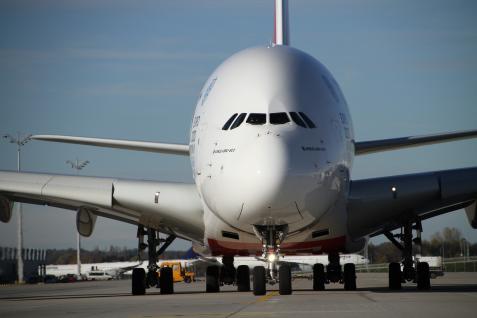
Major aerospace manufacturers, including Airbus, Collins Aerospace, Pratt & Whitney, and Rolls-Royce, are increasing their procurement of aircraft components from India as supply chain disruptions continue to impact Western markets, according to a report by Reuters.
Bengaluru-based suppliers Hical Technologies and JJG Aero are among the companies benefitting from this shift. Hical, which supplies parts to Raytheon Technologies and Boeing, plans to double its aerospace division revenue to ₹5 billion ($57.57 million) within three years, according to joint managing director Yashas Jaiveer Shashikiran. JJG Aero has seen its revenue grow from $2 million over 12 years to $20 million in the last six years, said CEO Anuj Jhunjhunwala.
According to Accenture Research, aerospace industry revenue in the Asia-Pacific region is expected to be 54% higher in 2024 compared to 2019, while North America and Europe remain 3% and 4% lower, respectively.
Companies in India manufacture a range of aircraft components, including landing gear, fuselage sections, wings, electrical switches, and motion control systems. Rolls-Royce has announced plans to double its sourcing from India within five years. Huw Morgan, senior vice president for aerospace procurement at Rolls-Royce, stated at an industry event that supply chain constraints have increased the need for sourcing from India.
Despite being among the world's largest aircraft buyers, India currently accounts for only 1% of the global aerospace supply chain, according to the Aerospace India Association (AIA). However, the AIA estimates that India’s share could rise to 10% within a decade, with the global market expected to reach $250 billion annually by 2033.
Airbus has awarded multiple contracts to Indian suppliers, with its contribution from India exceeding €1 billion annually. Michel Narchi, head of international operations at Airbus, told Reuters that every commercial Airbus aircraft contains components manufactured in India.
The civil aviation ministry recently met with industry leaders to discuss expanding component manufacturing. AIA Director General Srinivasan Dwarakanath highlighted the importance of sourcing raw materials such as aluminum, steel, and titanium domestically, as well as obtaining design certifications for Indian suppliers.
Industry experts note that while challenges such as geographical distance from major markets and regulatory approvals initially slowed growth, India’s aerospace ecosystem is now expanding to include design, engineering, and system integration.
On Date: