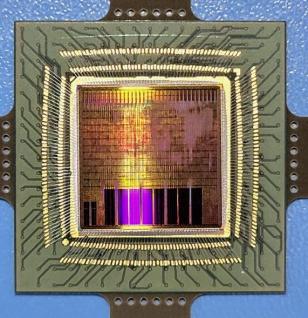
The Indian Institute of Technology Madras (IIT Madras) and the Indian Space Research Organisation (ISRO) have jointly developed and successfully booted an aerospace-grade semiconductor chip based on the SHAKTI microprocessor.
The chip, named IRIS (Indigenous RISCV Controller for Space Applications), is derived from the SHAKTI processor and is designed to meet computing requirements for ISRO’s sensors, command systems, and other mission-critical applications. It is part of efforts to indigenize semiconductor technology for space applications.
The ISRO Inertial Systems Unit (IISU) in Thiruvananthapuram proposed the development of a 64-bit RISC-V-based controller and collaborated with IIT Madras to define specifications and design the chip. The final configuration included fault-tolerant internal memories and custom interface modules such as CORDIC, watchdog timers, and advanced serial buses. The design also incorporated multiple boot modes and expandable memory interfaces to support future space missions.
The semiconductor was manufactured at the Semiconductor Laboratory (SCL) in Chandigarh using a 180 nm process. The chip packaging was completed by Tata Advanced Systems Ltd. in Karnataka, while the motherboard PCB was manufactured by PCB Power in Gujarat. Assembly and mounting were handled by Syrma SGS in Chennai, with software development carried out by IIT Madras.
ISRO Chairman V. Narayanan stated that the IRIS controller would be flight-tested in an upcoming space mission to validate its performance. Kamaljeet Singh, Director General of SCL, highlighted the facility's role in fabrication and post-silicon validation of the processor in collaboration with IIT Madras.
This development is part of India’s broader initiative to build domestic capabilities in semiconductor design and manufacturing.
On Date: