 New Delhi
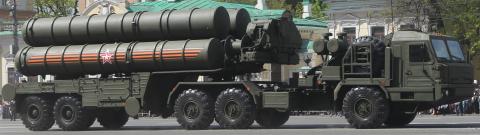
In a landmark move to boost India's defence self reliance, the Ministry of Defence has selected a domestic company to establish the nation’s first dedicated maintenance, repair, and overhaul (MRO) facility for the Russian origin S-400 Triumf air defence system. The facility, to be developed in collaboration with Russia’s Almaz-Antey, the system’s original manufacturer, is expected to be operational by 2028.
The decision comes in the wake of Operation Sindoor, during which the S-400, officially named “Sudarshan Chakra” in Indian service, played a pivotal role in intercepting and neutralizing aerial threats. On the night of May 7-8, Pakistan launched a barrage of drones and missiles targeting over 15 Indian cities in retaliation for Indian strikes on terror camps. The S-400 units, deployed across sensitive regions, were credited with thwarting these attacks and safeguarding key military assets.
Senior defence officials revealed that the plan to establish an in country MRO facility had been under consideration for some time, but the events of Operation Sindoor fast tracked the process. The selection of the Indian firm followed rigorous technical and security evaluations. The move is expected to drastically reduce India’s dependence on foreign technical support and ensure rapid turnaround for critical repairs.
Until now, India has relied on overseas support for S-400 maintenance, a process hampered in recent years by global supply chain disruptions and Western sanctions on Russia due to the Ukraine conflict. By localizing maintenance capabilities, India aims to keep its advanced missile shield operational at all times, even during periods of international tension.
The new facility will handle diagnostics, repairs, parts replacement, and eventually the overhaul of launcher vehicles and radar systems. Over time, officials anticipate that select spare parts may also be produced domestically under Russian technical supervision, further indigenizing the support ecosystem for long range air defence.
India signed a $5.43 billion agreement with Russia in 2018 to procure five S-400 squadrons. As of July 2025, three have been delivered and deployed in high threat areas such as Jammu & Kashmir, Punjab, and Rajasthan. The final two squadrons are expected to arrive in 2026 and 2027, following delays attributed to Russia’s military commitments and logistical challenges.
The S-400 system, capable of tracking 300 targets and engaging 36 simultaneously at ranges up to 400 km, forms the outermost layer of India’s multi tiered air defence network. It works in concert with indigenous Akash missiles and the Indo Israeli Barak-8 system to create a robust shield against a spectrum of aerial threats.
While the new MRO facility marks a significant step toward self reliance, Defence Secretary Rajesh Kumar Singh clarified that there are no current plans to manufacture the S-400 system in India. However, the government remains open to further indigenization in support and logistics.
India is also exploring the acquisition of additional S-400 squadrons, with decisions expected after the current batch is fully operational.
On Date: